
Apicectomy (Root-End Surgery)
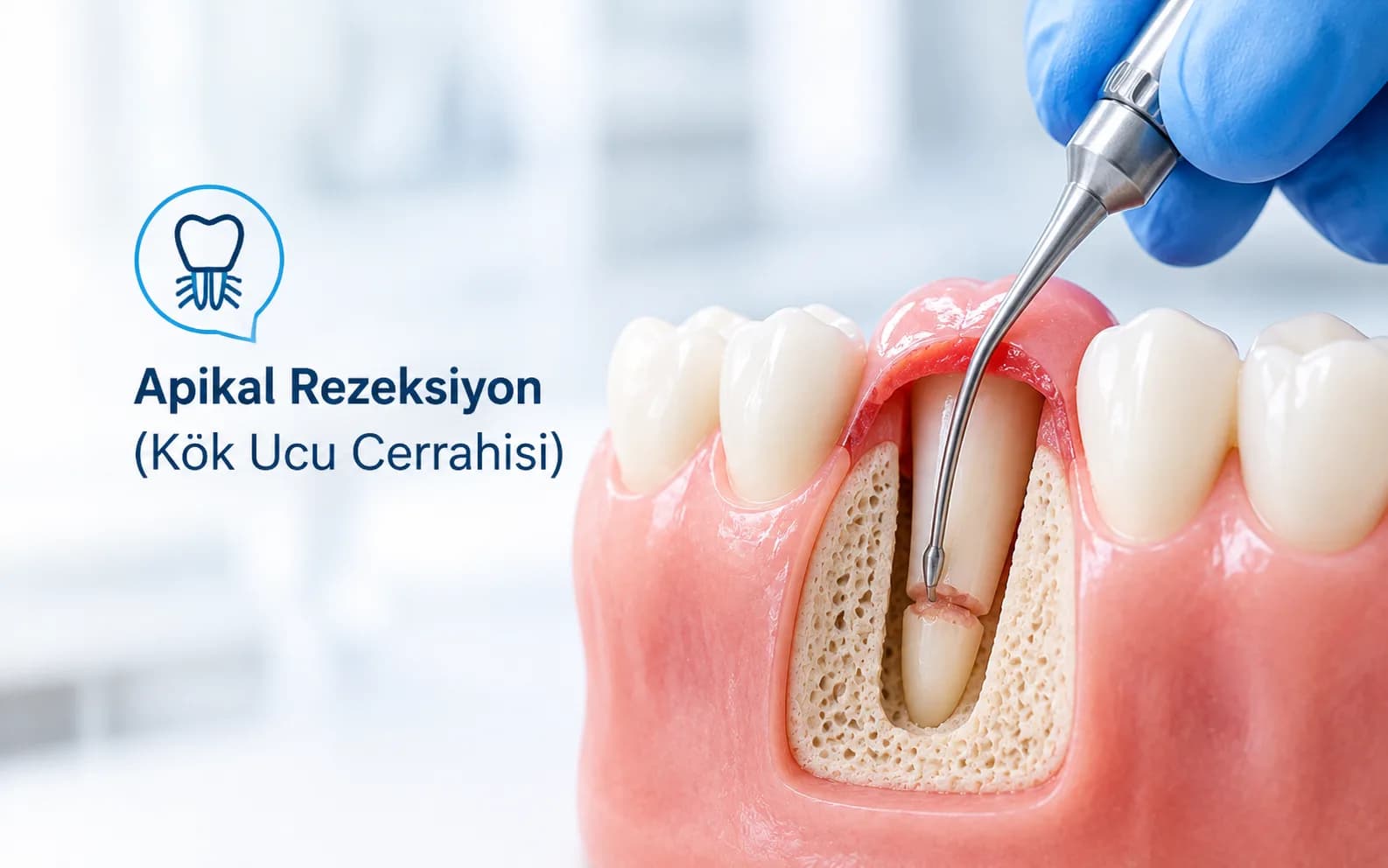
Surgical removal of the root tip and the surrounding inflamed tissue when a lesion fails to heal despite root canal treatment.
- Average duration
- 50 minutes
- Sessions
- Tek seans · dikiş kontrolü 7 gün sonra
When is this treatment considered?
In a tooth that has already had root canal treatment, the inflamed area at the root tip sometimes fails to resolve as expected. This can be caused by inaccessible lateral canal branches, an instrument fragment left inside the canal, an overly curved root anatomy, or the formation of a cyst.
When this happens, two options arise: redoing the root canal treatment (retreatment) or turning to root-end surgery. Priority is always given to finding a solution from within the canal; apicectomy is the last step to save the tooth once that route has been exhausted.
What is the alternative if it is not performed?
If not performed, the alternative that arises is extraction. When an apicectomy succeeds, your own natural tooth remains in your mouth — a gain that cannot be equated with any replacement option, implants included.
How is the procedure carried out?
Under local anaesthesia, the gum is carefully reflected, the inflamed tissue around the root tip is cleaned away, and a few millimetres from the very end of the root are surgically removed. The canal end is then sealed from the reverse direction with a biocompatible material (a retrograde filling), and the gum is closed with sutures.
The whole procedure takes 30 to 60 minutes. Tissue removed is sent for pathological examination where considered necessary.
What can be expected afterward?
Swelling over the first two to three days is normal; this is managed with cold application and the medication prescribed. Sutures are removed after about seven days. Bone healing, however, is assessed radiographically between six and twelve months, so there are long gaps between review appointments — but they should not be missed.
This page is general information and does not replace a dental examination. Whether the treatment suits you, and the method and duration, are decided only after an intraoral examination and radiographic assessment.
After treatment
- Apply something cold for the first 24 hours; avoid heat.
- Do not rinse your mouth or spit on the first day of the procedure.
- Avoid chewing hard food on that side for the first week.
- Attend your suture removal appointment (usually about seven days later).
- Smoking delays the healing process — stopping for at least a week is advised.
- Do not miss your six- and twelve-month radiographic review appointments.
The information on this page is for general guidance and does not replace a dental examination. Treatment decisions are made after an intraoral examination and radiographic assessment.
Related treatments
Is this treatment right for you?
After an examination and radiographic assessment we can discuss whether this is the right option for you.
0 533 400 88 62Your request is confirmed the same day.