
Dental Implant Treatment
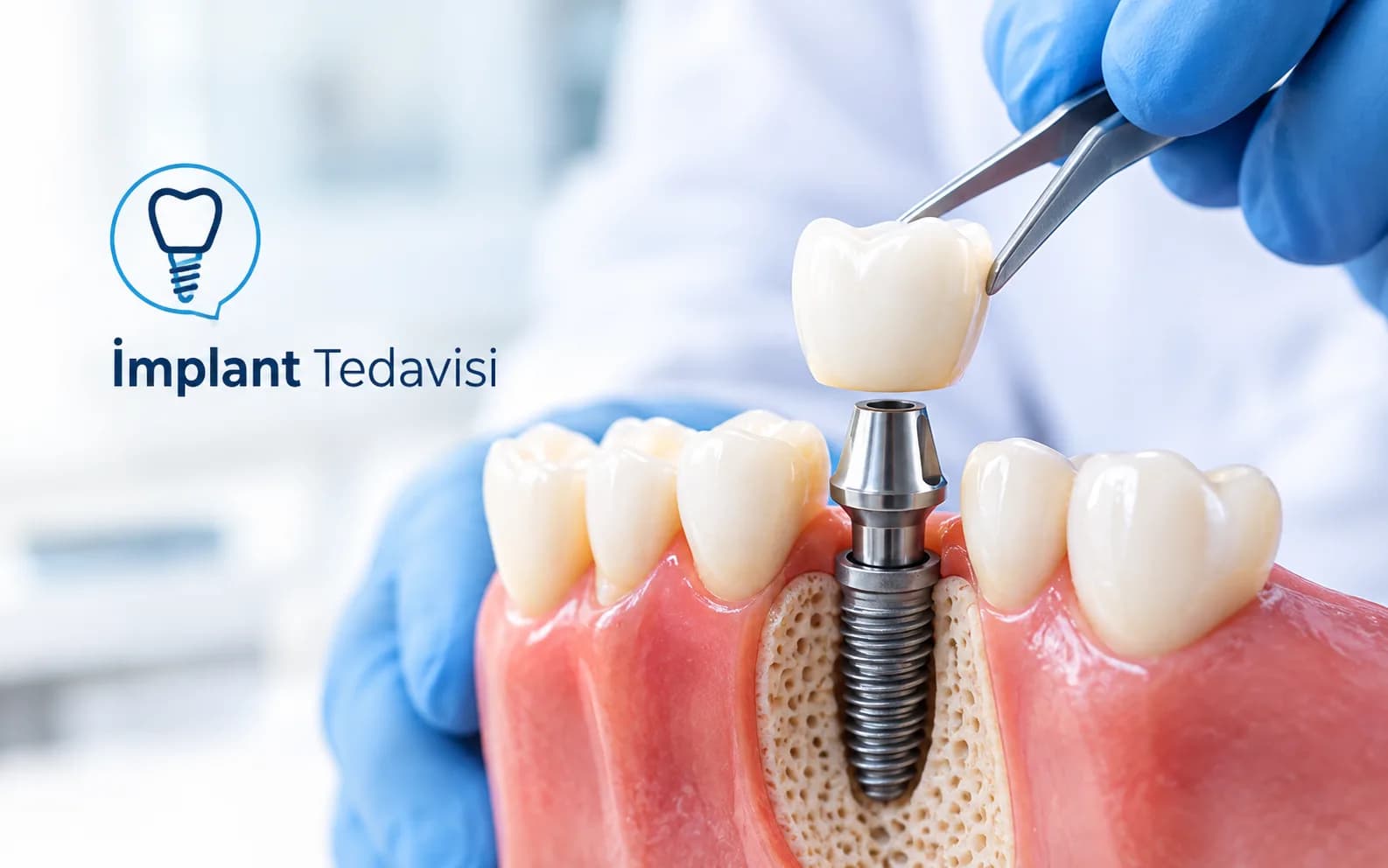
A titanium screw fixed into the jawbone in place of a missing tooth root, topped with a crown, bridge or denture to restore chewing function.
- Average duration
- 60 minutes
- Sessions
- Cerrahi seans 1 gün · iyileşme 2-4 ay · üst yapı 2-3 randevu
What does a dental implant involve?
A dental implant is a screw made of titanium or a titanium alloy, fixed into the jawbone where a lost tooth root used to be. Over the following months the surrounding bone fuses to its surface — a process called osseointegration — after which a crown, bridge or denture placed on top takes over the tooth's function.
What sets it apart from other options is that neighbouring teeth are left untouched. A conventional bridge calls for the healthy teeth on either side of the gap to be shaped down; an implant requires no such preparation.
Who can have it?
Suitability is judged by the bone, not by age. Three factors are assessed: the height and width of the bone, the condition of the gums, and your overall health. Uncontrolled diabetes, treatment for advanced osteoporosis (particularly bisphosphonate medication), heavy smoking and untreated gum disease each have a direct bearing on the outcome, so an implant is never planned until these have been discussed.
A shortage of bone does not rule the treatment out — grafting or a sinus lift can build up the site, though this extends the timeline and is planned as a separate stage.
How treatment proceeds
1. Planning
A panoramic radiograph is taken, supplemented where needed by three-dimensional tomography and an intraoral digital scan. The implant's diameter, length, angle and depth are worked out from this data, and where a surgical guide is used, the gap between the planned and the actual position is kept to a minimum.
2. The surgical appointment
The procedure is carried out under local anaesthetic: the gum is opened, the implant site is prepared and the implant is set in place. A single implant typically takes 30 to 60 minutes, and you leave for home the same day.
3. Healing
Expect roughly two to three months in the lower jaw and three to four in the upper. If the gap would otherwise be visible, a temporary restoration covers it throughout — no patient is left without teeth during this stage.
4. The final restoration
Once fusion with the bone is confirmed, an impression is taken and the crown, bridge or denture is fabricated. An intraoral scanner does away with the need for conventional impression material.
What follows treatment
Some swelling and mild discomfort over the first two to three days is normal and is managed with cold compresses and the prescribed medication. Sutures, if placed, are usually removed after seven to ten days. How long the implant lasts depends largely on your daily cleaning routine and regular check-ups: the implant itself cannot decay, but the gum and bone around it can become inflamed, a condition known as peri-implantitis. A review and professional clean at least once a year is therefore recommended.
What to expect
A well-planned implant can serve for many years, though no treatment can be guaranteed for a lifetime. The result achieved is closely tied to bone quality, oral hygiene, smoking habits and general health.
This page is general information and does not replace a dental examination. Whether the treatment suits you, and the method and duration, are decided only after an intraoral examination and radiographic assessment.
After treatment
- Apply cold compresses to the area for the first 24 hours and avoid heat.
- Do not rinse your mouth on the first day; from the next day use the mouthwash your dentist recommends.
- Avoid chewing hard food on that side until healing is complete, favouring lukewarm, soft meals.
- Smoking interferes with healing, so pausing for at least two weeks is advised.
- Take the prescribed antibiotics and painkillers exactly as directed.
- Contact the clinic if swelling keeps increasing after the third day or a fever develops.
Frequently asked about this treatment
Can dental implants last for the rest of my life?
No treatment comes with a lifetime guarantee. The implant itself can't develop decay, but the gum and bone surrounding it can become inflamed — a condition called peri-implantitis, and the most common reason implants are lost. Three factors decide how long one lasts: cleaning between teeth daily, keeping up with regular check-ups, and staying away from tobacco.
From start to finish, how long does implant treatment take?
The surgical part is completed in a single visit. After that, the implant needs time to fuse with the bone — on average two to three months in the lower jaw and three to four in the upper. Fitting the crown or bridge on top then takes another two to three appointments. If bone grafting is needed first, add another four to six months to the whole process. You'll get the exact total, in writing, at your planning appointment.
The information on this page is for general guidance and does not replace a dental examination. Treatment decisions are made after an intraoral examination and radiographic assessment.
Related treatments
Is this treatment right for you?
After an examination and radiographic assessment we can discuss whether this is the right option for you.
0 533 400 88 62Your request is confirmed the same day.