
Porcelain Veneers
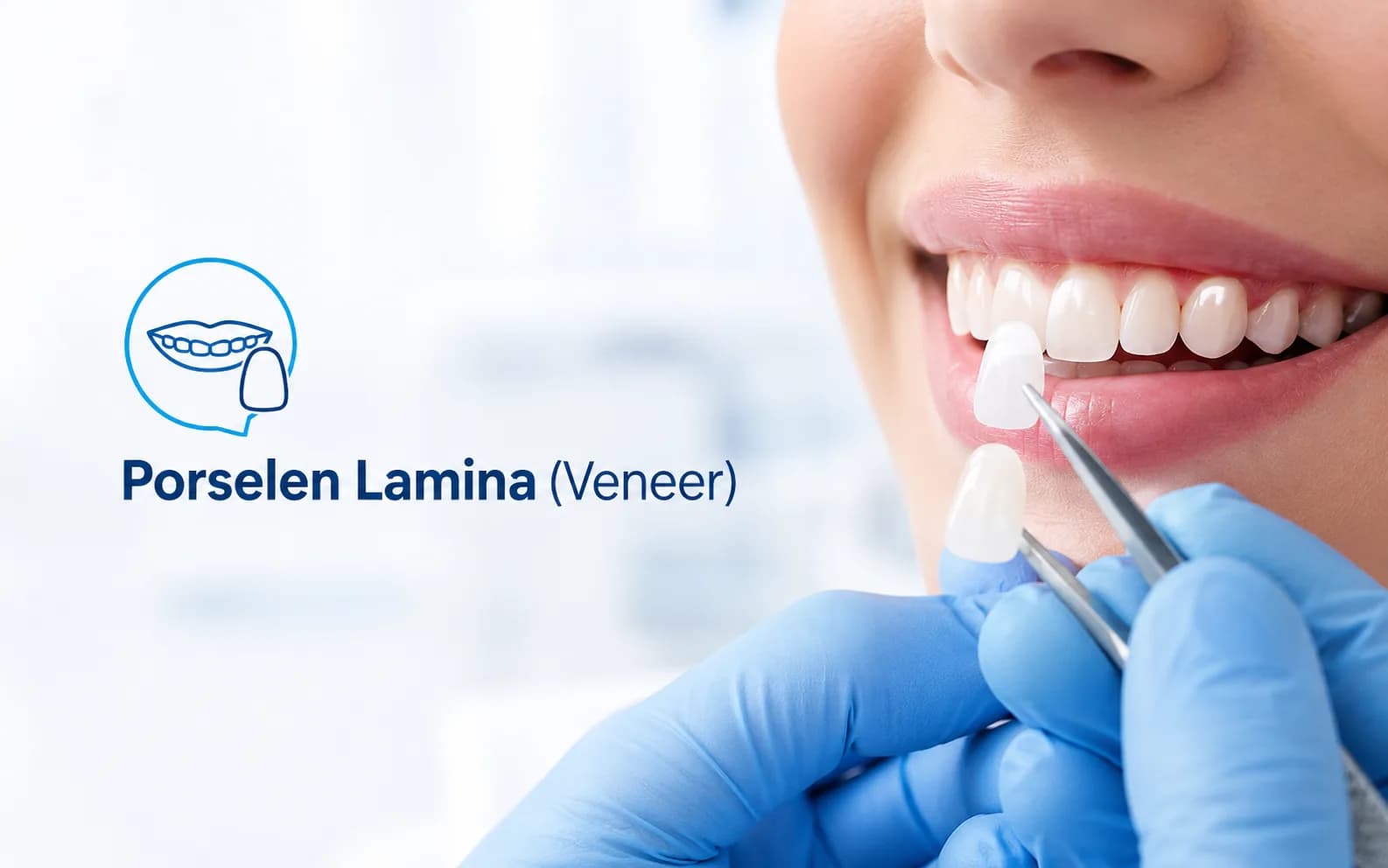
Thin porcelain shells bonded to the visible face of the front teeth to correct colour, shape and small gaps.
- Average duration
- 75 minutes
- Sessions
- 2-3 randevu · mock-up ile önizleme
What is a veneer?
A veneer is a porcelain shell, 0.3 to 0.7 mm thick, bonded only to the front surface of a tooth. Unlike a crown, it doesn't wrap around the tooth, so far less structure needs to be removed.
Given the right indication, a veneer is the least invasive route to an aesthetic result. Given the wrong one, it means cutting into healthy teeth without real need — telling the two apart is the most important part of the consultation.
When veneers make sense
- Permanent staining that whitening cannot correct (tetracycline discolouration, for instance)
- Small gaps between the front teeth (diastema)
- Chipped or worn edges
- Mismatches in length or shape
- Mild misalignment, when orthodontics is declined and the bite permits it
When they don't: noticeable crowding (address with orthodontics first), untreated gum disease, active decay, unmanaged clenching, and enamel that is too thin or otherwise insufficient.
How treatment proceeds
- Analysis and mock-up. Following digital planning, the proposed shape is applied directly to the teeth using a temporary material. You see it in the mirror and feel it while talking — this is the stage for changing your mind, since no tooth has been touched yet.
- Preparation. A very thin layer of enamel is removed according to the approved design.
- Impressions and temporaries. Taken digitally or conventionally; temporary veneers are worn while the lab works.
- Bonding. After checking shade and fit, the veneers are cemented with a dedicated adhesive system.
Longevity and care
Porcelain resists staining and doesn't change colour, but it can chip or fracture. Anyone who clenches needs a night guard. Habits like biting nails, chewing on pens or opening packaging with your teeth noticeably shorten a veneer's lifespan.
Gum health matters just as much as marginal fit — no aesthetic work looks right above bleeding gums, which is why gum treatment is finished before veneers begin.
This page is general information and does not replace a dental examination. Whether the treatment suits you, and the method and duration, are decided only after an intraoral examination and radiographic assessment.
After treatment
- Steer clear of very hard or sticky foods for the first week.
- Avoid opening packaging with your teeth, biting your nails or chewing pens.
- Wear your night guard every night if you clench.
- Keep up interdental cleaning — decay tends to start at the margin.
- Skip abrasive whitening toothpaste, which can dull porcelain.
- Book a check-up and professional cleaning every six months.
Frequently asked about this treatment
Do veneers involve cutting my teeth, and can that be undone?
Fitting a veneer means removing a very thin layer of enamel — usually 0.3 to 0.7 mm — from the tooth surface. That's far less tissue loss than a crown involves, but the layer that's removed doesn't grow back. That's why the mock-up stage matters so much: you get to see the design in your own mouth before any tooth is touched, and you're still free to change your mind. In some cases, minimal-prep or no-prep veneers are an option worth discussing too.
The information on this page is for general guidance and does not replace a dental examination. Treatment decisions are made after an intraoral examination and radiographic assessment.
Related treatments
Is this treatment right for you?
After an examination and radiographic assessment we can discuss whether this is the right option for you.
0 533 400 88 62Your request is confirmed the same day.