
Clear Aligner Treatment
Orthodontic tooth movement achieved with a series of custom-made clear aligners, without any brackets.
- Average duration
- 45 minutes
- Sessions
- Ortalama 6-18 ay · 6-8 haftada bir kontrol
What are clear aligners?
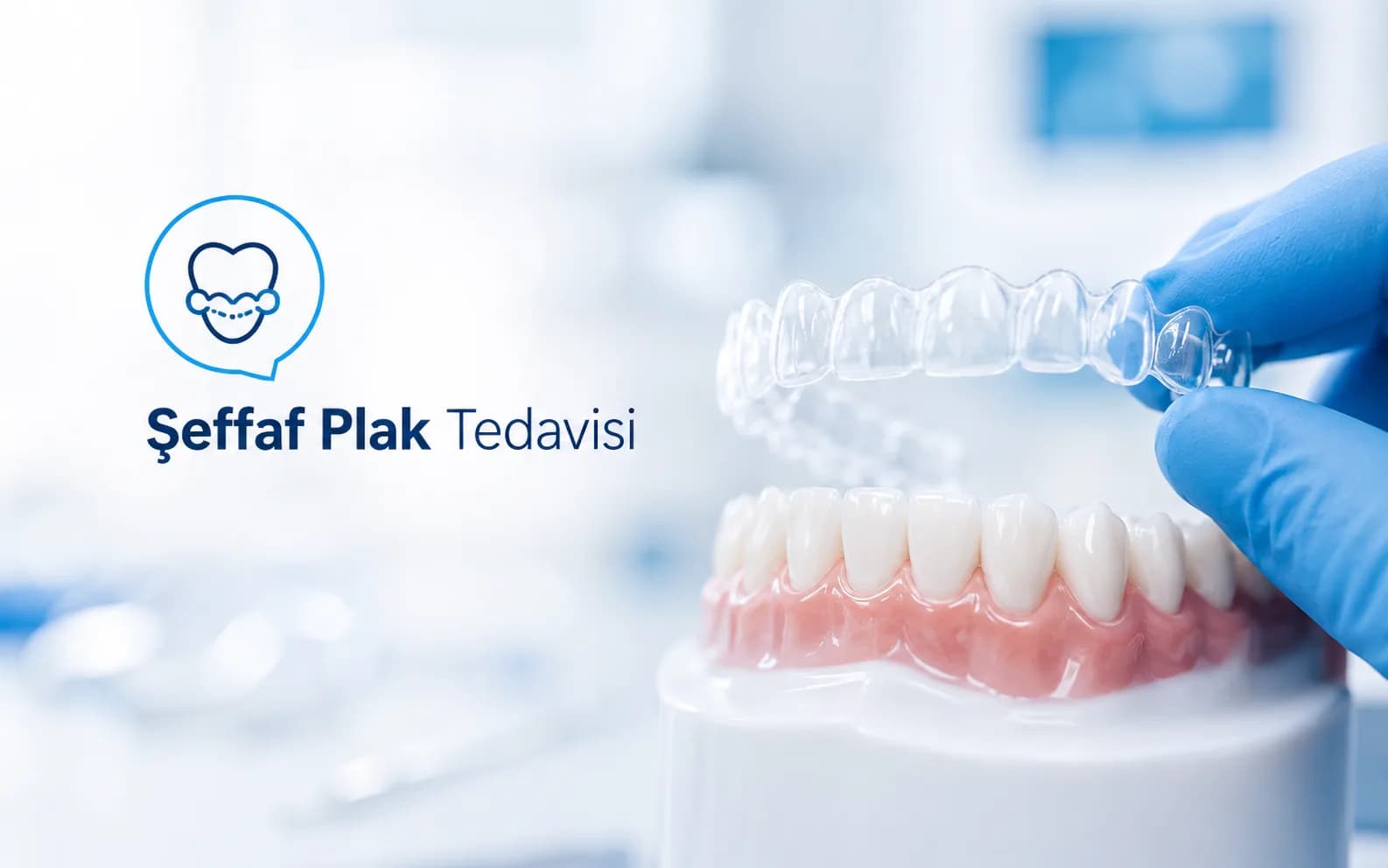
Using a digital model captured with an intraoral scanner, the path each tooth will take from its starting position to its target is mapped out. A separate aligner is made for every stage of that path, each moving the teeth a very small amount, with a new one worn every 7 to 14 days.
Aligners are worn 20 to 22 hours a day and removed for eating and brushing — which is both the treatment's biggest advantage and its biggest risk: an aligner that isn't worn achieves nothing.
Can aligners always replace brackets?
No. Clear aligners work well for mild to moderate crowding, closing spaces, minor bite corrections, and relapse following earlier orthodontic treatment.
For skeletal jaw discrepancies, pronounced rotations, cases requiring an impacted tooth to be brought into the arch, and complex bite problems, brackets or surgically supported treatment tend to be more suitable. Which approach genuinely fits is worked out at the examination alongside the measurements — the claim that "every case can be treated with aligners" simply isn't accurate.
How treatment proceeds
- Records. Intraoral scan, photographs, and panoramic and cephalometric radiographs.
- Digital planning. A movement plan is built, with estimated duration and aligner count. This plan is a simulation, not a guarantee of the final result.
- Production and delivery. The first aligners are handed over and insertion and removal are demonstrated. Small tooth-coloured attachments are bonded where needed.
- Reviews. Every 6 to 8 weeks, progress is checked against the plan. If it drifts off course, a new scan and updated plan follow.
- Retention. Once treatment finishes, teeth tend to shift back toward their original position. Without a retainer — worn at night or a bonded lingual wire — the result won't be maintained. This stage isn't optional, it's part of the treatment itself.
Comfort and getting used to it
Pressure and mild tenderness for the first two to three days with each new aligner are normal and signal that the tooth is moving. Any temporary change in speech tends to fade within the first week.
Nothing but water should be consumed while wearing aligners — hot drinks can warp them, and sugary drinks get trapped underneath, raising the risk of decay.
This page is general information and does not replace a dental examination. Whether the treatment suits you, and the method and duration, are decided only after an intraoral examination and radiographic assessment.
After treatment
- Wear the aligners 20 to 22 hours a day — less wear time extends treatment.
- Drink only water while aligners are in; remove them for anything else.
- Clean them with lukewarm water and a soft brush, never hot water.
- Keep them in their case when not worn — an aligner wrapped in a napkin usually ends up in the bin.
- If one is lost or breaks, call the clinic before moving on to the next one.
- Continue using the retainer provided at the end exactly as instructed.
Frequently asked about this treatment
Is there a maximum age for orthodontic treatment?
There's no upper age limit for shifting teeth into position — as long as the gums and bone are healthy, treatment is possible even in your fifties or sixties. What matters is periodontal health, not age. In children, though, early intervention (between roughly 7 and 10 years old) can give better results for certain skeletal issues, which is why a first orthodontic check is recommended around age seven.
Will my teeth drift back to how they were once treatment is over?
Yes, if there's no retention afterwards — relapse is what you'd expect, not an unusual exception. The tissues around the teeth take months to settle fully into their new position, and a slight tendency to shift stays with you for life. That's exactly why, once treatment finishes, you're given a night-time retainer or a thin wire bonded behind the teeth; follow the instructions for wearing it, and the result holds.
The information on this page is for general guidance and does not replace a dental examination. Treatment decisions are made after an intraoral examination and radiographic assessment.
Related treatments
Is this treatment right for you?
After an examination and radiographic assessment we can discuss whether this is the right option for you.
0 533 400 88 62Your request is confirmed the same day.