
Fillings & Decay Treatment
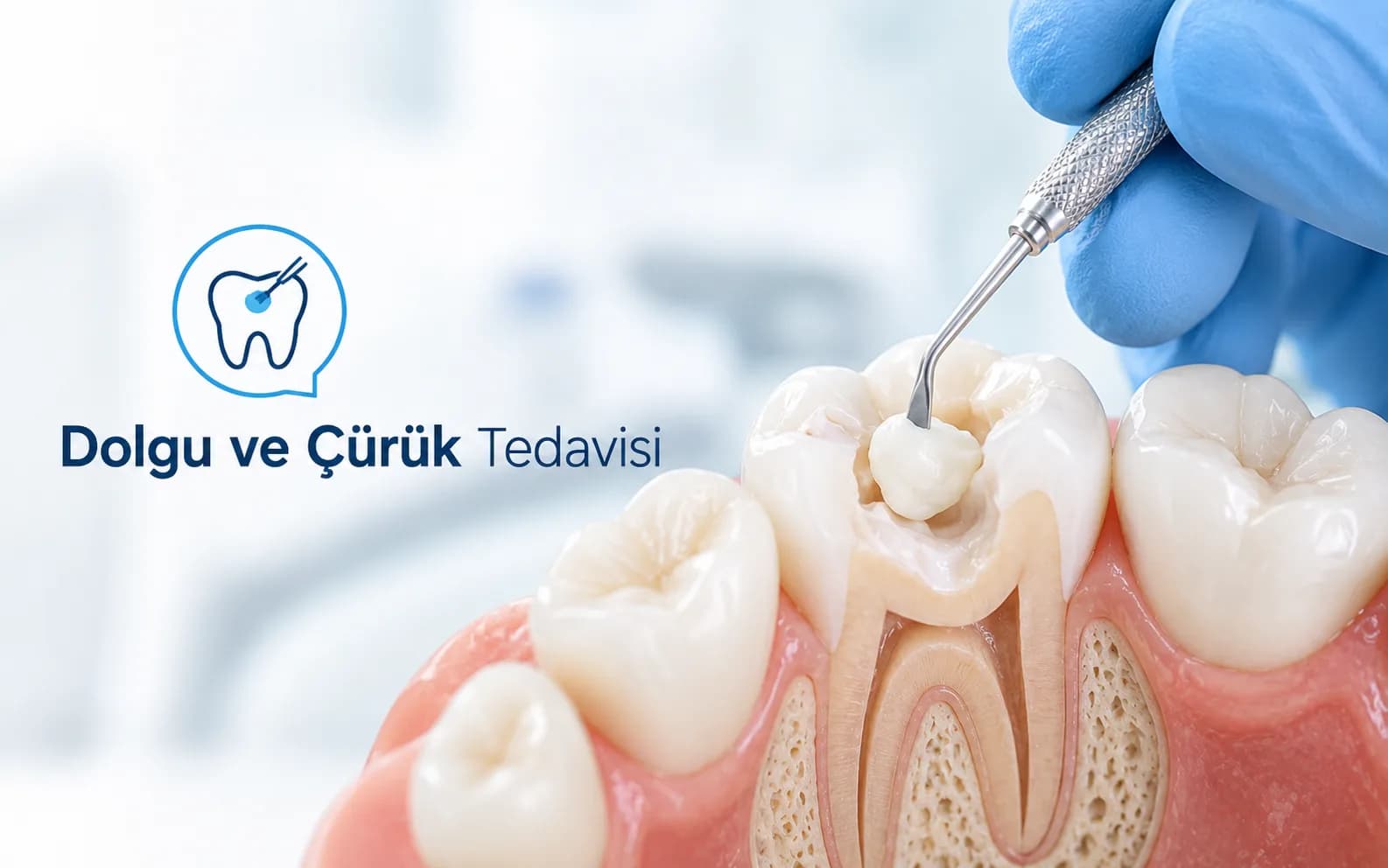
Clearing away decayed tissue and rebuilding the tooth with composite material, preserving as much natural structure as possible.
- Average duration
- 30 minutes
- Sessions
- Tek seans · diş başına 20-40 dakika
How does the decay process work?
Bacteria in the mouth convert sugar from food into acid, and that acid dissolves minerals out of the enamel surface. Saliva makes up part of this loss during the day, but when the frequency of eating tips the balance, the enamel surface breaks down and decay sets in. What matters here is not the amount of sugar consumed but the frequency: a sweet drink sipped little by little through the day causes more damage than a dessert eaten in one sitting.
Is a filling always needed for an early lesion?
No. Lesions confined to the enamel that haven't yet cavitated (white spot lesions) can be monitored with fluoride application and a change in habits. This isn't "wait and see" — it's "measure and watch", followed up at a review appointment.
Once a cavity has formed, though, a filling is required; the lesion will not close by itself from that point on.
Composite fillings
Tooth-coloured composite resins are now the preferred choice for both front and back teeth. Because composite bonds chemically to the tooth, there is no need to cut away healthy structure for retention as was once done with amalgam — so less tooth is lost.
The visit typically runs as follows: the tooth is numbed (not always necessary for shallow decay), the decayed tissue is cleared out, the surface is prepared with an etchant and bonding agent, composite is built up in thin layers and light-cured, and finally the bite is checked and the surface polished.
Approach for deep decay
When decay comes very close to the nerve, techniques aimed at keeping the tooth vital (indirect pulp capping) may be used. If the nerve has already been reached, root canal treatment becomes the next step. That distinction becomes clear during the procedure and from the X-ray findings; both possibilities are explained to the patient beforehand.
How long does a filling last?
The lifespan of a composite filling depends on its size, the tooth's position, biting forces, any grinding habit, and daily oral hygiene. The margins and underlying surface are checked at every review appointment; if leakage is caught early, only the filling needs to be replaced, not the whole tooth.
This page is general information and does not replace a dental examination. Whether the treatment suits you, and the method and duration, are decided only after an intraoral examination and radiographic assessment.
After treatment
- Composite hardens under the curing light, so you can eat and drink right after the appointment.
- If you were numbed, avoid chewing on that side until sensation fully returns.
- Mild sensitivity to hot and cold in the first few days is normal and fades over time.
- Contact us if the filling feels high or biting feels uncomfortable.
- Without regular cleaning between teeth, decay can return in the same spot.
- Remember to schedule a check-up every six months.
The information on this page is for general guidance and does not replace a dental examination. Treatment decisions are made after an intraoral examination and radiographic assessment.
Related treatments
Is this treatment right for you?
After an examination and radiographic assessment we can discuss whether this is the right option for you.
0 533 400 88 62Your request is confirmed the same day.