
Fixed Braces (Orthodontics)
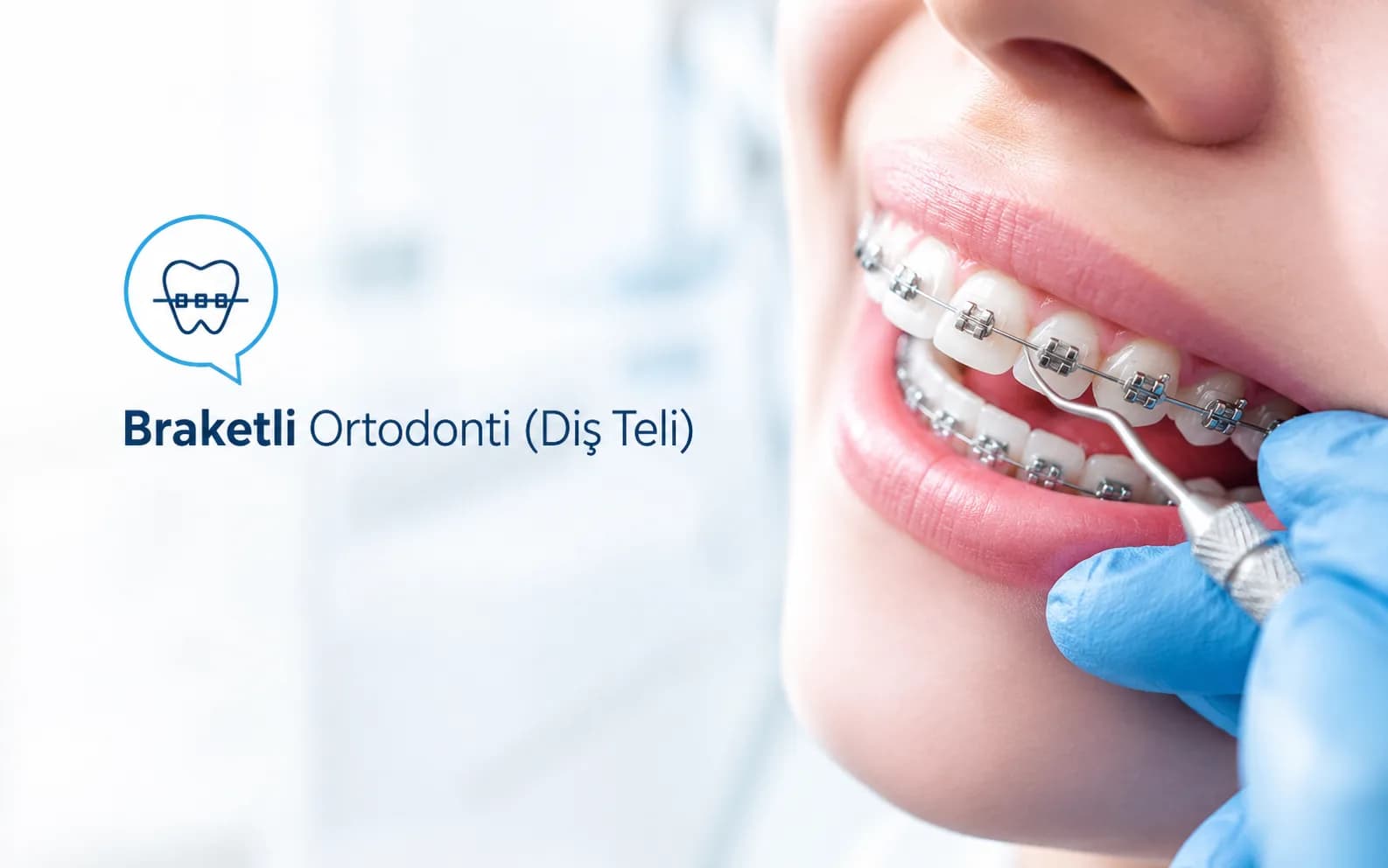
Classic orthodontic treatment with metal or ceramic brackets, providing the highest degree of control for complex tooth and bite problems.
- Average duration
- 45 minutes
- Sessions
- Ortalama 12-24 ay · 4-6 haftada bir kontrol
Why brackets still hold their place
Even as aligner technology has advanced, brackets remain the most controlled tool in orthodontics. Because a bracket is bonded directly to the tooth, it doesn't depend on patient compliance, and it delivers more predictable results for root movement, pronounced rotation, and bringing an impacted tooth into the arch.
The choice rests on the type of movement needed, not on appearance. Which approach genuinely fits is worked out at the examination together with the measurements.
Bracket options
Metal brackets are the most durable and the most commonly chosen. Ceramic brackets are close to tooth colour and less noticeable; they achieve the same movements but are somewhat more fragile.
How treatment proceeds
- Records and analysis. Intraoral scan or impression, photographs, and panoramic and cephalometric radiographs. Cephalometric analysis reveals whether the problem originates from the teeth or from jaw position — the treatment plan is built on that distinction.
- Preparation. Decay and gum treatment are finished first, since brackets speed up decay in an unhealthy mouth.
- Bonding. Brackets are bonded to the teeth and the first archwire is fitted. This step is painless and requires no anaesthesia.
- Adjustments. Wire changes and activation take place every four to six weeks.
- Debonding and retention. Once treatment concludes, the brackets are removed, tooth surfaces are cleaned, and a retainer is provided.
Discomfort and adjustment
Pressure and tenderness while chewing for two to three days after the first wire and after each activation are typical. Soft food is sufficient during that time. Orthodontic wax can help if the cheek or lip becomes irritated.
Cleaning: the real deciding factor
Brackets create an ideal surface for plaque to accumulate. Neglected cleaning around them can leave permanent white spots (demineralisation) once the braces come off. For this reason, orthodontic patients are given interdental brushes, an orthodontic toothbrush, and a fluoride rinse together, and cleaning is checked at every review.
Retention
Retention isn't a stage that follows treatment — it's part of the treatment itself. A retainer must be worn until the teeth are fully settled in their new positions, and to some extent for life; otherwise relapse is the expected outcome.
This page is general information and does not replace a dental examination. Whether the treatment suits you, and the method and duration, are decided only after an intraoral examination and radiographic assessment.
After treatment
- Stick to soft foods in the first days and after each adjustment.
- Avoid hard foods (nuts, ice), sticky foods (gum, toffee) and stringy foods.
- Cut apples and bread into pieces rather than biting into them.
- Brush after every meal with an orthodontic toothbrush and use interdental brushes.
- If a bracket or wire comes loose or breaks, call us rather than waiting for your next appointment.
- Keep wearing the retainer provided after treatment exactly as advised.
The information on this page is for general guidance and does not replace a dental examination. Treatment decisions are made after an intraoral examination and radiographic assessment.
Related treatments
Is this treatment right for you?
After an examination and radiographic assessment we can discuss whether this is the right option for you.
0 533 400 88 62Your request is confirmed the same day.