
Gum Treatment (Periodontics)
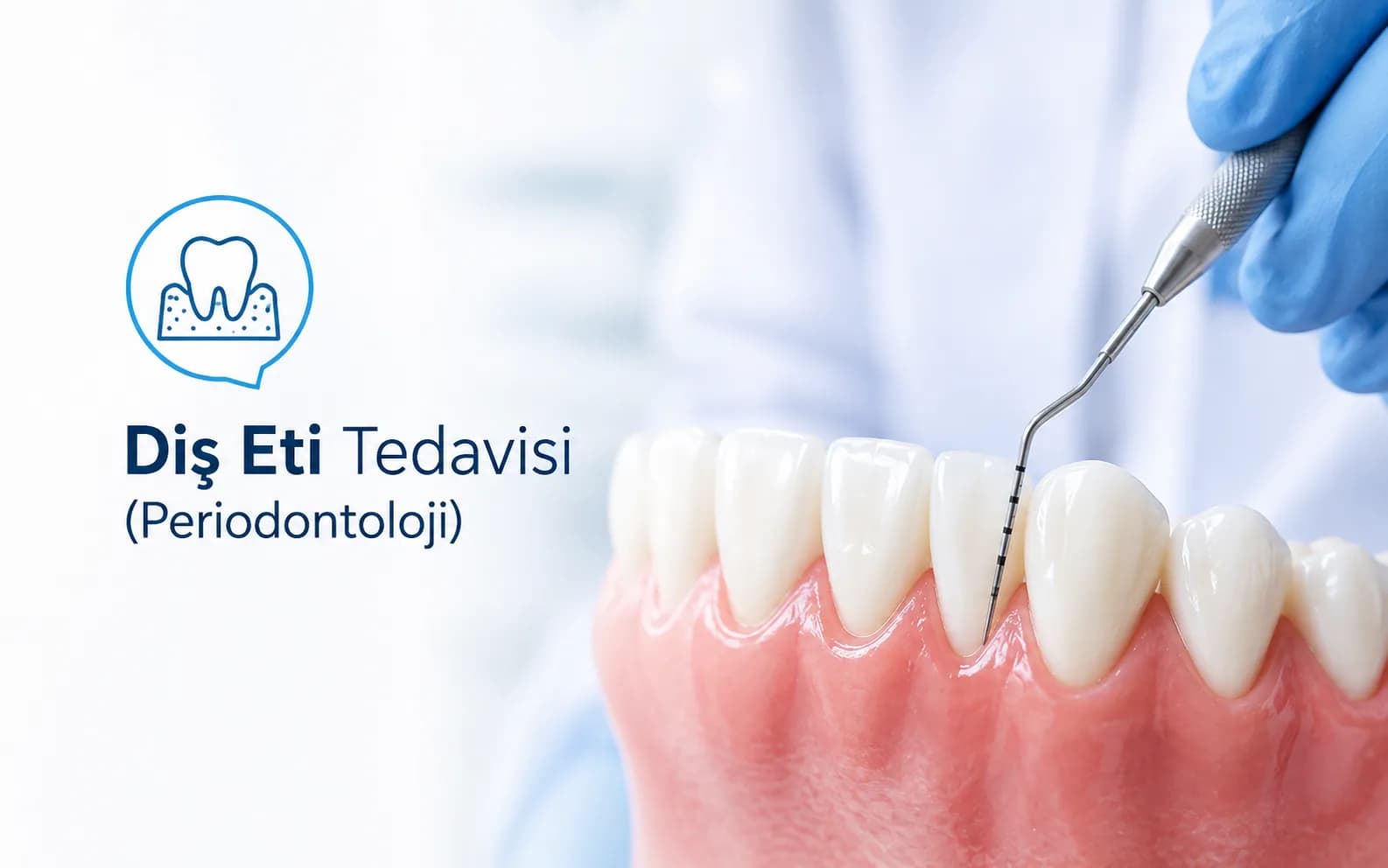
Scaling and deep root-surface cleaning aimed at stopping calculus build-up, gum inflammation and bone loss.
- Average duration
- 45 minutes
- Sessions
- 1-4 seans · üç ayda bir bakım kontrolü
How does gum disease develop?
The bacterial film that collects on the tooth surface — plaque — hardens into calculus within 24 to 48 hours. Calculus cannot be removed by brushing and forms a surface where bacteria take hold. The body responds with inflammation: gingivitis. At this stage everything can still be reversed.
Left untreated, the inflammation spreads to the fibres and bone that anchor the tooth: periodontitis. Bone that has been lost does not grow back on its own, which is why catching the problem early is worth far more than treating it later.
What signs stand out?
Bleeding when brushing, red and swollen gums, bad breath that won't clear, gums receding so teeth look longer, slight looseness or gaps opening between teeth.
In smokers the bleeding is masked and the disease tends to progress more quietly. The idea that "no bleeding means no problem" is misleading.
The treatment process
Scaling
Ultrasonic tips and hand instruments clear calculus and plaque from the tooth surface, which is then polished. This is usually finished in one visit. The procedure does not damage the enamel; sensitivity may linger for a few days.
Deep cleaning (root surface debridement)
Where pockets have deepened, the root surface beneath the gum is cleaned under local anaesthetic. This is typically done quadrant by quadrant over two to four visits.
Surgical option
Advanced cases may call for a flap procedure or bone grafting to reach the pocket directly. That decision is made after re-evaluating the gums once initial cleaning is done — non-surgical treatment is always tried first.
After treatment
What decides the outcome is not the visit to the clinic but the daily care done at home. No treatment holds up without interdental brushes or floss. Maintenance visits every three months are recommended for the first year, with the interval extended once the condition stabilises.
This page is general information and does not replace a dental examination. Whether the treatment suits you, and the method and duration, are decided only after an intraoral examination and radiographic assessment.
After treatment
- Sensitivity to hot and cold for a few days afterward is possible; use a desensitising toothpaste.
- Avoid very hot or acidic drinks on the first day.
- Use interdental brushes or floss every day, ideally in the evening.
- Brush twice daily for two minutes with a soft to medium brush.
- Smoking directly lowers treatment success — ask us about support to quit.
- Keep up with your three-monthly maintenance appointments.
Frequently asked about this treatment
My gums bleed when I brush — should I cut back on brushing?
No, quite the opposite. Bleeding signals inflammation, and plaque is what's causing that inflammation. Brushing less lets plaque build up further and makes the inflammation worse. The right response is to keep brushing regularly with a soft-bristled brush and add flossing or interdental brushes; as the inflammation eases, the bleeding fades on its own. If it carries on for more than two weeks, we'd recommend coming in for a check.
The information on this page is for general guidance and does not replace a dental examination. Treatment decisions are made after an intraoral examination and radiographic assessment.
Related treatments
Is this treatment right for you?
After an examination and radiographic assessment we can discuss whether this is the right option for you.
0 533 400 88 62Your request is confirmed the same day.