Your child's first dental visit: timing and preparation
When to schedule the first appointment, how to prepare at home, and which phrases to avoid — a practical guide for families.
Contents
For many adults, dental fear traces back to a single bad experience in childhood. Whether that happens depends largely on when and how the first appointment is arranged.
When should the first visit be?
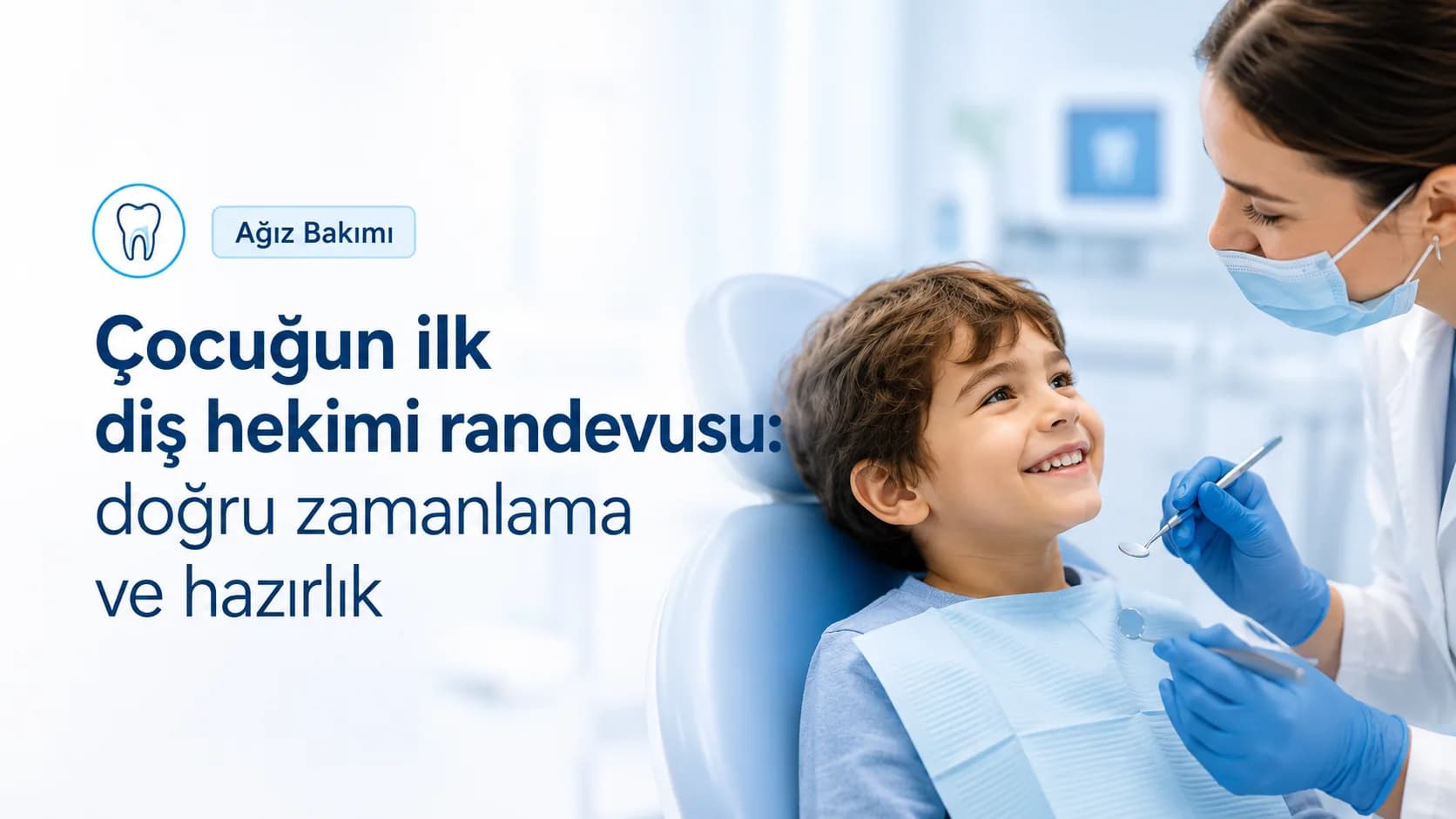
Within six months of the first baby tooth appearing, and no later than the first birthday. That may sound early, but the goal isn't treatment — it's introduction.
At this visit, the child sees the dental chair, holds the mirror, and chats with the dentist. Teeth are counted, and the family receives guidance on brushing and diet. Usually nothing else is done — and that's exactly the point.
If a child's first encounter with a dentist happens during a painful emergency, the fear takes root that day and often carries through into adulthood.
Preparing at home
Phrases to avoid: "don't be scared," "it won't hurt," "you won't get a needle." Each of these plants the idea of a threat the child hadn't considered before. "It won't hurt" may also turn out to be untrue — and a broken promise damages trust in a way that's hard to repair.
Better phrases: "they're going to count your teeth," "they'll look with a mirror," "the chair goes up and down."
Don't voice your own dental anxiety in front of your child — children pick up worry from tone of voice, not from words.
Choosing the right time of day
A morning slot is best; cooperation from a tired child is far harder to get than from a rested one. Avoiding a heavy meal right before the appointment helps too.
How we approach it in the clinic
We use a tell-show-do method: every instrument is described first, then tried on the child's hand or fingernail, then used in the mouth. No force, no restraint, no deception. Some children won't sit in the chair at the first session — that's not a failure. A child who sits willingly at the second appointment is a better patient than one who was pushed through the first.
Is it true that baby teeth "will fall out anyway"?
No. Beyond chewing and speech, baby teeth act as space holders for the permanent teeth. Losing a primary molar too early lets the neighbouring tooth drift forward, leaving no room for the permanent tooth behind it to erupt — crowding is the result.
On top of that, deep decay in a baby tooth can affect the developing permanent tooth germ beneath it, and causes the child real pain in the meantime.
Care at home
- Until roughly age seven or eight, a parent should finish the evening brushing — a child can't clean thoroughly enough alone.
- Age-appropriate fluoride toothpaste, about a pea-sized amount.
- No milk or juice in a bottle at night.
- How often sugar is eaten matters as much as how much: grazing throughout the day is more harmful than eating the same amount of sweets in one sitting.
- Don't skip the six-monthly check-up.
The information on this page is for general guidance and does not replace a dental examination. Treatment decisions are made after an intraoral examination and radiographic assessment.
All articles