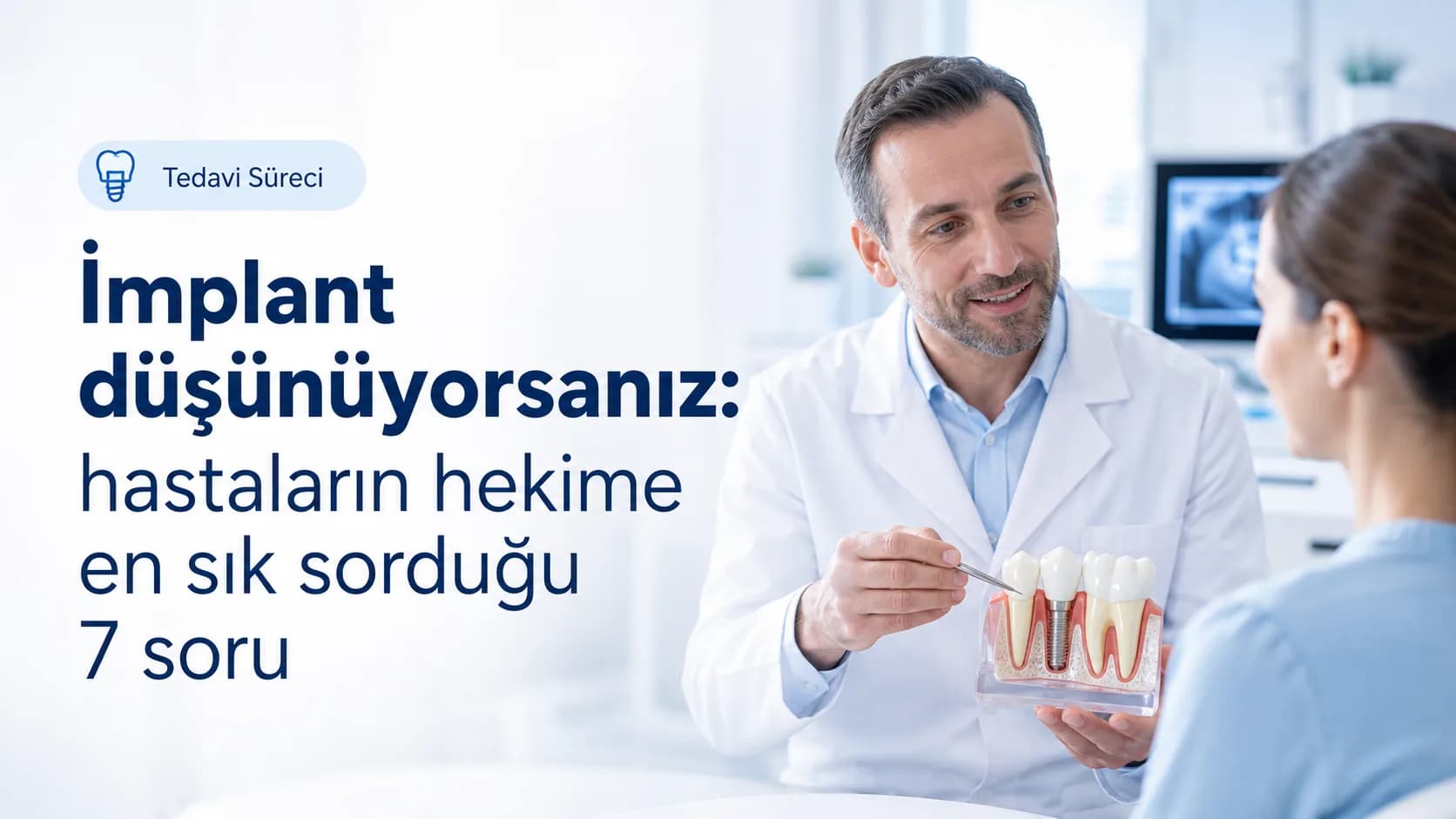
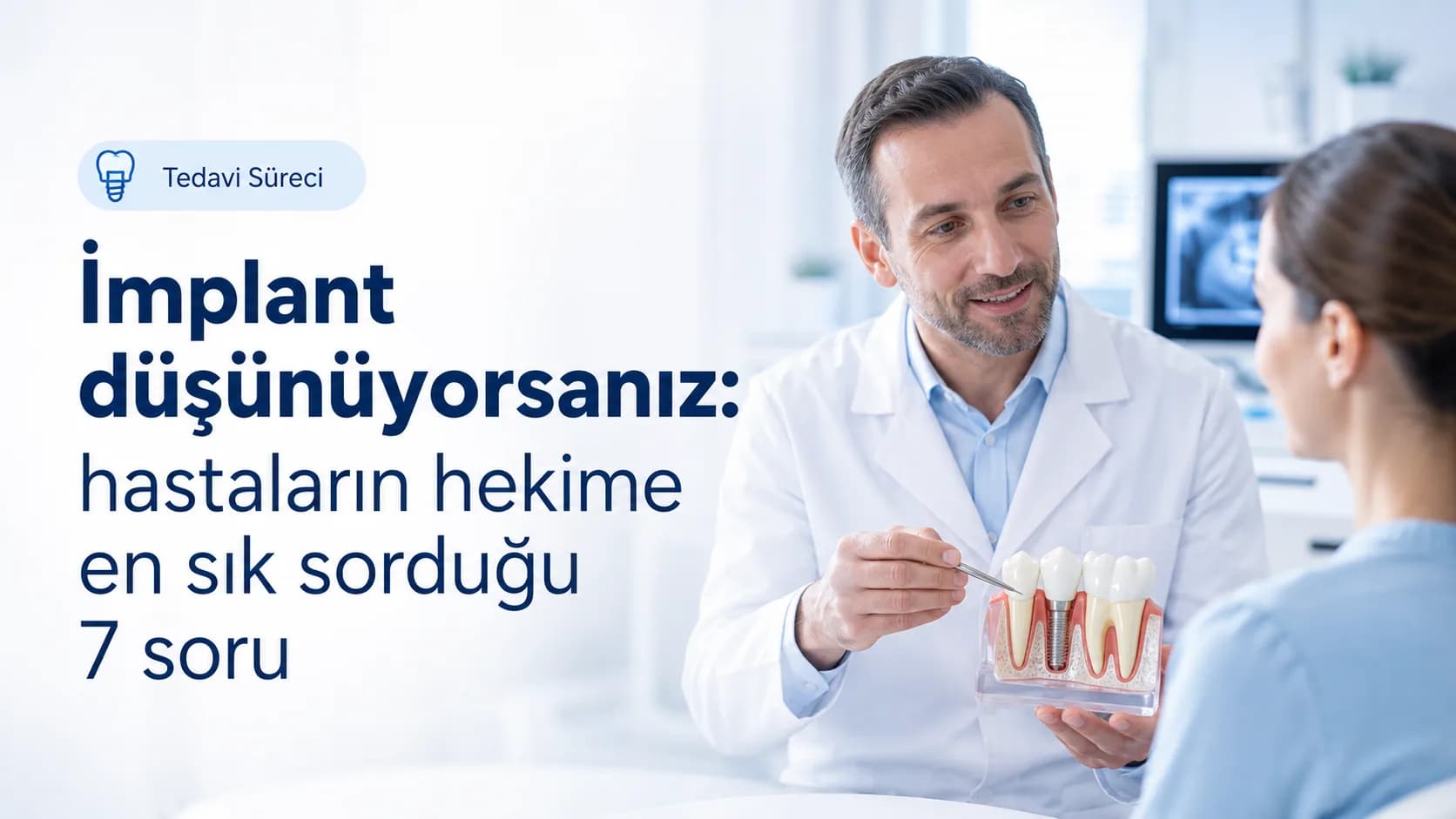
Thinking about an implant? Seven questions patients ask us most
We've gathered the questions patients raise most often before deciding on an implant, answered the way we answer them in everyday practice.
Contents
Whether to replace a missing tooth with an implant, a bridge or a denture is one of the questions we hear most in the clinic. Here are seven questions that come up again and again about implants, with the answers we give in daily practice.
Does the surgery hurt?
The procedure is carried out under local anaesthesia, and no pain is expected during surgery. Mild swelling and discomfort over the first two to three days is normal and easily managed with cold compresses and the prescribed medication. Most patients are back to their daily routine the next day.
Who is, and isn't, a good candidate?
Age alone is not the deciding factor — bone structure and general health are. The assessment looks at bone height and width, gum health and any systemic conditions together. Uncontrolled diabetes, treatment for advanced osteoporosis, heavy smoking and untreated gum disease all lower the odds of success.
Even when bone volume is insufficient, treatment is usually still possible: grafting or a sinus lift can build up the site, adding four to six months to the process.
How long does the whole process take?
The surgery itself is a single session. Osseointegration — the bone fusing to the implant — takes roughly two to three months in the lower jaw and three to four in the upper. Fitting the crown afterward needs two or three further visits. The total timeline is given in writing at the planning appointment, so there's no uncertainty along the way.
Will I be without a visible tooth during treatment?
No. If the gap is in a visible area, it is covered with a temporary restoration. In some cases, when bone density and the implant's initial stability allow it, a temporary fixed restoration can even be placed on the day of surgery — though this isn't an option for every patient; it depends on what's found during the procedure.
Can the body reject an implant?
Titanium has been used in medicine for decades and is biocompatible, so a classical rejection reaction isn't expected. Implants can still be lost, however, most often due to inflammation of the gum and bone around them (peri-implantitis). Much like gum disease around a natural tooth, this is linked to plaque build-up — and it's preventable with regular care.
Is daily care harder than for a natural tooth?
It's different, not harder. Implants can't decay, so there's no cavity risk; but cleaning the soft tissue around them matters more than around a natural tooth. Interdental brushes, and a water flosser where needed, should become part of the daily routine. A professional check-up and clean at least once a year is recommended.
Does an implant last a lifetime?
No dental treatment can be guaranteed for life — be cautious of any claim that says otherwise. Three things determine how long it lasts: daily cleaning, regular check-ups, and staying away from cigarettes. Smoking is the clearest, and the one truly modifiable, risk factor for implant loss.
In short: there's no single "right" answer for a missing tooth — implants, bridges and dentures each have their own advantages and limits. The soundest approach is to discuss these options together after an examination and radiographic assessment.
The information on this page is for general guidance and does not replace a dental examination. Treatment decisions are made after an intraoral examination and radiographic assessment.
All articles